How to Clean Dodge Engine Bays Safely Without Damaging Electronics (HEMI® & EV Models)
You pop the hood of your Dodge Charger or Challenger after a long winter, and what stares back is a gritty, greasy mess that makes your HEMI® V8 look more like a barn find than a muscle machine.
TL;DR:
You can safely clean your Dodge engine bay without frying electronics by covering sensitive parts (fuse box, alternator, intake), using low-pressure water, and avoiding direct sprays on connectors. Use a degreaser designed for engines, agitate with soft brushes, rinse gently, then dry thoroughly with compressed air or a leaf blower. Never use a pressure washer up close. For Dodge EVs like the Charger Daytona EV, avoid spraying the high-voltage orange cables entirely — wipe instead.
Key Takeaways:
- Cover the fuse box, alternator, battery, and air intake before any liquid touches the bay.
- Low pressure (garden hose without a nozzle) is safe. Pressure washers are risky.
- Degreaser belongs on greasy metal parts — not on painted surfaces or sensitive modules.
- Drying is critical — compressed air or a leaf blower prevents corrosion and electrical issues.
- EV Dodges need extra care: never spray high-voltage orange cables or charge ports.
“I Sprayed My Engine Bay — Now My Dodge Won’t Start”
We’ve all heard the horror story. A guy with a Dodge Ram or Challenger SRT decides to blast years of grime with a pressure washer. Five minutes later, the dashboard lights up like a Christmas tree, and the car won’t crank.
Here’s what happened: water got inside an electrical connector that wasn’t sealed properly. Modern Dodges have dozens of connectors under the hood — for fuel injectors, sensors, ignition coils, and the PCM (Powertrain Control Module) . Water creates tiny bridges between electrical pins, causing shorts or false signals.
The good news? You can clean safely. You just need to know where water hurts and where it doesn’t.
What Your Dodge Engine Bay Actually Looks Like (Electronics Map)
Before you start, let’s identify the sensitive spots on most Dodge models — Charger, Challenger, Durango, or Hornet.
Areas that hate water:
- Fuse box (TIPM or PDC) – contains relays and fuses. Not fully waterproof.
- Alternator – internal windings can corrode.
- Battery terminals – moisture accelerates corrosion.
- Air intake snorkel or filter – water inside kills engines.
- Any unsealed connector – look for exposed wires or cracked rubber boots.
- PCM (engine computer) – usually near the battery or driver-side fender.
- Ignition coils (on HEMI® V8 and Pentastar V6) – water trapped under coil boots causes misfires.
Areas that handle water just fine:
- Engine block and valve covers – metal loves degreaser.
- Radiator and condenser fins – just don’t bend them.
- Hoses and plastic shrouds – scrubbable.
- Engine bay inner fenders – plastic or metal, safe to spray.
“The Dodge Charger remains one of the last full-size muscle sedans available today, but its engine bay electronics are just as sensitive as any luxury car’s.”
How Dodge Engine Bays Got More Complicated
Let’s see why cleaning got trickier over the years:
- 1960s-70s – Carburetors, distributors, minimal wires. You could hose everything down without worry.
- 1980s-90s – Fuel injection arrives. More sensors, but connectors were simple.
- 2003 – HEMI® V8 returns with coil-on-plug ignition. Each cylinder has its own coil — water-sensitive.
- 2011-2014 – Uconnect and more body modules appear. Electronics spread across the bay.
- 2015-Present – SRT Performance models add adaptive suspension sensors, active exhaust valves, and more connectors.
- 2024+ – Dodge Charger Daytona EV introduces high-voltage orange cables and battery cooling lines. Never spray those.
The Safe 7-Step Dodge Engine Bay Cleaning Method
This works for HEMI® V8, Pentastar V6, Hurricane I6, and even the Hornet R/T plug-in hybrid (with extra EV precautions). Set aside one hour.
Step 1: Cool Engine Only
Never clean a hot engine. Water on hot metal causes steam that forces moisture into connectors. Let your Dodge cool for at least 30-45 minutes after driving. Warm is fine. Hot is not.
Step 2: Remove Obvious Loose Dirt
Use a leaf blower or compressed air to blow off dry leaves, dust, and sand. This prevents scratching when you scrub later.
Step 3: Cover the Electronics (This Is the Big One)
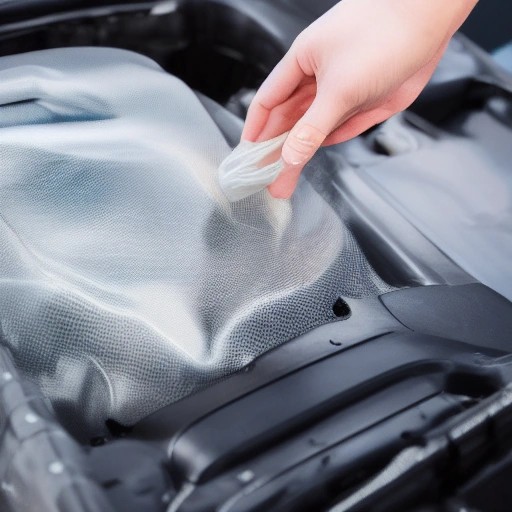
Grab plastic bags and rubber bands or painter’s tape. Cover:
- Fuse box – entire box, not just the lid.
- Alternator – bag around it.
- Battery – both terminals covered.
- Air intake – snorkel opening and any exposed filter housing.
- PCM (engine computer) – usually silver box near battery.
- Aftermarket accessories – cold air intakes, catch cans, exposed wiring.
Bold safety reminder: Never wrap bags tightly around hot components right after driving. Heat needs to escape. Only cover after the engine is cool.
Step 4: Apply Degreaser the Right Way
Use an engine-specific degreaser (Gunk, Simple Green Automotive, or Chemical Guys). Avoid oven cleaners or household degreasers — they etch aluminum.
Spray onto greasy areas only: valve covers, oil filter area, transmission bellhousing, power steering pump. Avoid painted body panels inside the bay (hood underside, fender tops).
Let it sit for 3-5 minutes. Not longer. Dry degreaser leaves residue.
Step 5: Agitate with Soft Brushes
Use different brushes for different surfaces:
| Brush Type | Where to Use |
|---|---|
| Soft detailing brush | Sensors, wiring looms, connectors (gentle!) |
| Long-handled wheel brush | Deep valleys between cylinder heads |
| Toothbrush | Around injectors, throttle body, small brackets |
| Microfiber cloth | Painted surfaces, plastic covers |
Scrub in circles on greasy spots. Don’t scrub connectors or fuse boxes — wipe those gently with a damp cloth instead.
Step 6: Rinse with LOW Pressure (The Mistake Zone)
Here’s where people ruin their Dodges. No pressure washers. No jet nozzles. Here’s what works:
- Garden hose with no nozzle — just the open flow of water.
- Spray from a distance (arm’s length or more).
- Angle water downward — never directly at sensors or fuse boxes.
- Keep the engine running during rinse (optional but smart). A running engine creates heat that evaporates water and seals out moisture from running alternator.
Pro trick: One owner with a Durango SRT says, “I leave the engine idling and use a hand-pump sprayer filled with water. Zero pressure. Never had an issue in 4 years.”
Step 7: Dry Immediately and Thoroughly
Water left sitting causes corrosion and electrical problems. Dry with:
- Leaf blower – best option. Blow out every crevice, connector, and spark plug well.
- Compressed air – even better if you have it.
- Microfiber towels – for flat surfaces and plastic covers.
Remove all your plastic bags and covers. Then start the engine and let it idle for 10 minutes with the hood open. Heat drives out remaining moisture.
The “Dodge HEMI® Spark Plug Well” Warning
HEMI® V8 engines have deep spark plug wells (holes) where water loves to hide. If water sits in these wells, it causes misfires and rough running.
After cleaning, always blow compressed air or leaf-blower air directly down each spark plug well (through the coil boot area). Do this even if you think you kept water away. It takes 30 seconds and saves a tow truck bill.
“Just spraying degreaser on a cold HEMI® and hosing it off could trap water in the plug wells. Always blow them out.”
Comparison Table: Cleaning Methods by Dodge Model
| Dodge Model | Engine Bay Complexity | Safe Cleaning Method | Special Precautions |
|---|---|---|---|
| Challenger/Charger R/T | Moderate (HEMI® V8) | Garden hose + degreaser | Blow out spark plug wells |
| Charger SRT Hellcat | High (supercharged) | Low-pressure rinse only | Cover supercharger intake opening |
| Durango SRT | High (heavy electronics) | Hand-sprayer + wipe | Many sensors near firewall |
| Hornet R/T PHEV | Very High (gas + electric) | Wipe only | Avoid orange high-voltage cables |
| Charger Daytona EV | Extreme (EV specific) | Damp cloth only | Never spray battery cooling lines |
Cleaning Dodge EV and Hybrid Engine Bays (Charger Daytona EV, Hornet R/T)
This is different. Electric Dodges and hybrids have bright orange high-voltage cables and components. Water intrusion here is dangerous — not just for the car, but for you.
For Dodge Charger Daytona EV and Hornet R/T:
- Do not spray any liquid. Use a damp (not wet) microfiber cloth.
- Never spray degreaser toward orange cables.
- Avoid the charge port area completely — water can damage charging electronics.
- Focus on plastic covers and visible painted surfaces only.
- Leave the high-voltage battery (under the car) alone — it’s sealed, but don’t pressure wash near its connectors.
“Dodge EV owners should treat the frunk (front trunk) area like a living room — dust it, don’t drown it.”
Frequently Asked Questions
Can I use a pressure washer on my Dodge Ram or Charger engine bay?
You can, but most experienced mechanics say don’t. Even on low pressure, a pressure washer forces water past seals. One mistake costs hundreds in sensors.
What if water already got into a connector?
Disconnect the battery, unplug the wet connector, spray it with electrical contact cleaner or WD-40 (which displaces water), blow dry, reconnect. Then cross your fingers.
Will a steam cleaner damage my HEMI® electronics?
Steam is safer than pressure washing because it uses less water volume. But steam forces moisture into connectors too. Use steam only on metal engine parts, not on sensors or the fuse box.
How often should I clean my Dodge engine bay?
Once or twice a year is plenty. More often if you live on dirt roads or near the ocean (salt air). Less is more here — over-cleaning increases risk.
Is it safe to clean a warm Dodge engine?
Warm (not hot) is actually ideal — 10-15 minutes after driving. Warm helps degreaser work and evaporates rinse water faster. Hot warps plastic and creates steam.
Can I take my Dodge to a car wash for engine bay cleaning?
Almost never. Car wash pressure wands are too powerful. Find a detailer who specializes in engine bays or do it yourself with low pressure.
Does the Uconnect system warn about water in electronics?
Not directly. But you’ll see warning lights (ABS, check engine, traction control) if water shorts a sensor. Turn off the car and let everything dry overnight before panicking.
References
References:
- Dodge Garage – Official Engine Bay Care Guide
- ChallengerTalk Forum – HEMI® Cleaning Tips
- Car and Driver – Safe Engine Bay Cleaning
- Stellantis EV Maintenance – Dodge Charger Daytona EV
Ever fried a sensor by pressure washing your Dodge engine bay? Or do you have a trick that’s worked for years? Drop your story below — the community needs to learn from both the wins and the mistakes.