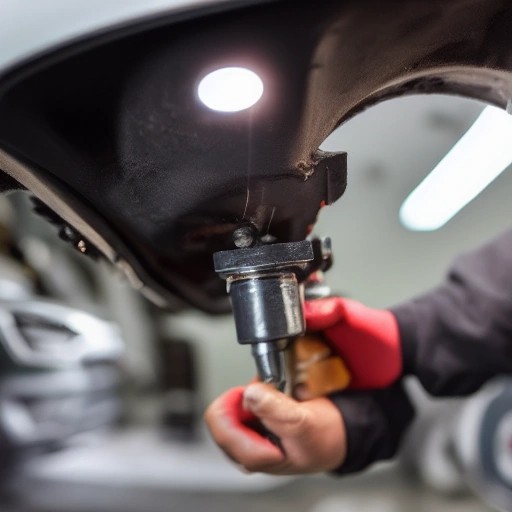
How to Clean and Service Dodge Brembo Brake Calipers to Prevent Squeal
You’re cruising through town in your Dodge, feeling that HEMI® V8 power, when you pull up to a stoplight and instead of the satisfying bite of your Brembo brakes, you hear an embarrassing squeal that makes you want to disappear into the seat—but that annoying noise is usually fixable with some simple cleaning and maintenance.
TL;DR
Brembo brake squeal on your Dodge usually comes from brake dust buildup, worn pads, or corrosion on the caliper hardware. You can clean the calipers using a dedicated brake cleaner and soft brushes, lubricate the proper contact points with high-temperature brake grease, and follow the correct pad bedding procedure. For Dodge models equipped with 6-piston Brembo brakes, an official TSB addresses a clicking noise during low-speed turns by adding friction discs and cleaning the hub face. Regular maintenance every 3,000-5,000 miles prevents buildup and keeps your brakes quiet.
Key Takeaways
- Brake dust buildup is the number one cause of squeal—clean calipers regularly to prevent it
- Use the right cleaner—dedicated brake cleaner is safe for components; avoid harsh chemicals
- Lubricate correctly—use high-temperature brake grease only on the back of pads and contact points, never on the friction surface
- The rubber compatibility rule—EPDM rubber seals are damaged by mineral oil and incompatible lubricants
- Official TSB for 6-piston Brembo click noise—cleaning hub faces and installing friction discs solves the issue
- New pads need bedding in—allow a 300 km running-in period with smooth braking for proper pad and disc alignment
Why Brembo Calipers Squeal
Your Dodge’s Brembo brakes are serious performance hardware. They deliver incredible stopping power, but they’re also high-maintenance parts that need regular attention. The squeal you hear is usually vibration—the brake pads oscillating against the caliper or rotor at high frequency.
“Brake pads will still be in them because store is doing it, but they said they’d clean em up if i brought a cleaner”—even shops need to be reminded that Brembo calipers require specific care .
Now here’s where Dodge owners get frustrated. Those beautiful red Brembo calipers collect brake dust like a magnet. And that dust, combined with road grime and moisture, creates a paste that interferes with proper pad movement .
Common Squeal Causes
| Cause | What It Sounds Like | Fix |
|---|---|---|
| Brake dust buildup | High-pitched squeal during light braking | Clean calipers thoroughly |
| Glazed pad surface | Squeal that gets louder with heat | Remove pads, scuff surface with sandpaper |
| Worn pads | Squealing or grinding noise | Replace pads immediately |
| Lack of lubrication | Squeal from pad backing plate vibration | Apply high-temp brake grease |
| Corroded hardware | Clicking noise during low-speed turns | Clean and replace as needed |
Official TSB: The Clicking Noise Fix
If you own a 2020 Dodge Durango, 2018-2020 Charger, or Challenger equipped with the 6-piston Brembo brakes, there’s a specific Technical Service Bulletin for a clicking noise during low-speed turns .
The symptoms: You hear a click when making sharp turns in parking lots, usually with the windows down .
The fix includes:
- Remove both front brake rotors
- Clean the hub face where the rotor contacts with a ScotchBrite pad
- Install friction discs between the rotor and hub using a small amount of adhesive
- Replace the caliper mounting bolts (discard the old ones)
The parts kit (P/N 68530289AA for Durango, 68530288AA for Challenger/Charger) contains four caliper mounting bolts, four friction discs, and adhesive .
How to Clean Your Brembo Calipers
What You’ll Need
- Dedicated brake cleaner
- Soft-bristled brushes (toothbrush, detail brush, medium-bristled brush)
- Microfiber cloths
- High-temperature brake grease (rubber-compatible)
- Safety glasses and gloves
- Car wash soap
Safety Reminder: Always work on a cool engine. Never hang the caliper by the brake hose—use a wire hanger or support stand to prevent hose damage .
Step-by-Step Cleaning
Step 1: Preparation
Park on level ground, engage the parking brake, and chock the wheels. Remove the wheel. If the caliper needs to come off, remove it carefully and support it without straining the brake hose .
Step 2: Initial Wash
Wash the caliper with car wash soap and water to remove loose dirt and grime. Pay attention to the areas around the pads where dust accumulates .
Step 3: Degreasing
Apply a dedicated brake cleaner or degreaser to the caliper. Focus on heavily soiled areas and allow it to dwell according to product instructions .
Step 4: Scrubbing
Using your brushes, gently scrub the caliper from top to bottom. Reach into crevices and around the brake pads. For stubborn grime, apply more cleaner and scrub more vigorously .
Step 5: Brake Cleaner Application
Spray the caliper with brake cleaner to remove remaining brake dust and residue. Allow it to evaporate completely .
Step 6: Final Rinse and Drying
Rinse thoroughly with water and dry with a clean microfiber cloth. Make sure all crevices are dry .
“I found that most of the dust simply wiped off the calipers thanks to the clearcoat. Hardly any effort was required to get them clean” .
The Lubrication That Actually Works
This is where many DIYers get it wrong. Brembo calipers use EPDM rubber for seals and boots—a special compound that’s compatible with brake fluid but easily damaged by mineral oil and incompatible lubricants .
Where to Apply Brake Grease
Do apply lubricant to:
- The back of the brake pads (where they contact the caliper pistons)
- The pad ears where they slide in the caliper bracket
- Caliper slide pins and pin boots
- Contact points between the pad and caliper
Never apply lubricant to:
- The friction surface of the pad
- The rotor surface
- Any rubber seal (unless using specific rubber-compatible grease)
“The lubricant must be heat-resistant so it won’t melt and run off the pads, and it must be durable so it will provide long-lasting protection. Never use ordinary chassis grease or silicone brake grease for this purpose” .
Pin and Boot Inspection
When servicing Brembo calipers, always inspect the slide pins, pin boots, and external piston seals :
- Check for damage, corrosion, and ability to slide freely
- Clean and lubricate with specific grease suitable for each component
- Replace cracked or torn rubber components—they allow moisture entry that creates rust and prevents smooth operation
The Pad Equation: When to Replace
Squeal sometimes means your pads are done. The factory pads that came with your Brembo calipers have wear indicators—when you hear a persistent screech while braking (not just light pressure), it’s telling you the pad material is thin .
Available replacement options include:
| Pad Type | Characteristics | Best For |
|---|---|---|
| Brembo Premium NAO Ceramic | Quiet, clean wheels, smooth operation | Daily driving, reduced dust |
| Brembo Premium Low-Met | Stronger initial bite, quieter with premium shims | Performance-oriented drivers |
“Customers notice installing these pads was night and day. No more squeaking, and the braking feels solid!” .
Bedding In New Pads
If you’ve replaced pads or rotors, the bedding-in process is critical. Brembo recommends a 300 km running-in period with smooth braking :
- Use low brake pressure
- Low deceleration
- Low temperature
- Low speed (like normal stops at traffic lights)
During this period, the pad and disc surfaces align properly. Skip this step, and you’ll likely end up with squeal or vibration that won’t go away.
“During that period short and smooth braking will be carried out to allow the correct alignment between pads and discs surfaces” .
Maintenance Schedule
Every 3,000-5,000 miles:
- Visually inspect calipers and pads
- Clean visible brake dust from calipers
- Check pad thickness
Every oil change:
- Inspect slide pins and boots
- Clean and lubricate if needed
Annually or 12,000 miles:
- Thorough brake fluid inspection (dark fluid needs replacement)
- Check for corrosion on pistons—corrosion can cause binding and uneven brake force
Brake fluid note: Brake fluid is hygroscopic—it absorbs moisture over time. Water contamination lowers boiling temperature and causes corrosion in caliper pistons and bores . Replace fluid every two years or as advised in your owner’s manual.
Frequently Asked Questions
How often should I clean my Brembo brake calipers?
Every 3,000 to 5,000 miles, or more frequently if you drive in dusty conditions . The more you drive with dirty calipers, the more brake dust gets baked onto the surfaces.
Can I use a pressure washer to clean Brembo calipers?
Not recommended. High pressure can force water and debris into the caliper’s internal components, potentially causing damage .
What type of cleaner is safe for Brembo calipers?
Use a dedicated brake cleaner formulated for brake components. Avoid harsh chemicals that can damage the caliper’s finish .
Why do my Brembo brakes squeal when they’re cold?
Brembo performance pads often squeal when cold due to the high-friction compound. Warm them up with a few light stops and the squeal usually quiets.
How do I fix a clicking noise from my Dodge’s Brembo brakes?
If it’s a low-speed turn click on a 2020+ Durango or 2018-2020 Charger/Challenger, check TSB 8530289AA—this involves cleaning the hub face and installing friction discs .
Can I paint my Brembo calipers myself?
Yes, but use high-temperature paint specifically designed for brake components. Paint that isn’t heat-resistant will bubble and peel. Follow manufacturer instructions carefully .
What if cleaning doesn’t stop the squeal?
The problem might be glazed pads, worn components, or caliper pistons that are sticking. Have the calipers professionally inspected—severe corrosion can cause binding and uneven brake force distribution .
The Bottom Line
Your Dodge’s Brembo brakes are high-performance equipment that deserve regular attention. Most squeal comes from simple things—brake dust buildup, lack of lubrication, or worn pads. With basic tools, the right cleaner, and high-temperature brake grease, you can tackle most squeal issues in your driveway.
The key is using the right products. Dedicated brake cleaner won’t damage the caliper finish, and rubber-compatible grease protects those critical seals. Regular cleaning prevents brake dust from baking onto the calipers, making your maintenance easier over time.
Always use performance features responsibly and follow local driving laws. Those brakes are designed to stop your muscle car—don’t cut corners on safety.
References
Dodge Brembo Brake Service Resources:
- Brembo Brake System Maintenance Key Points Manual
- Tomorrow’s Technician – Solving Dodge/Jeep Brembo Brake Noise
- Brembo Official Product and Technical Information
- Mopar Official Parts Information
Have you dealt with squealing Brembo brakes on your Dodge? What worked for you—cleaning, lubrication, or a pad swap? Share your experience in the comments to help other owners!
What’s your biggest frustration with keeping Dodge performance brakes quiet—brake dust, pad selection, or just getting the right grease? Drop your thoughts below!