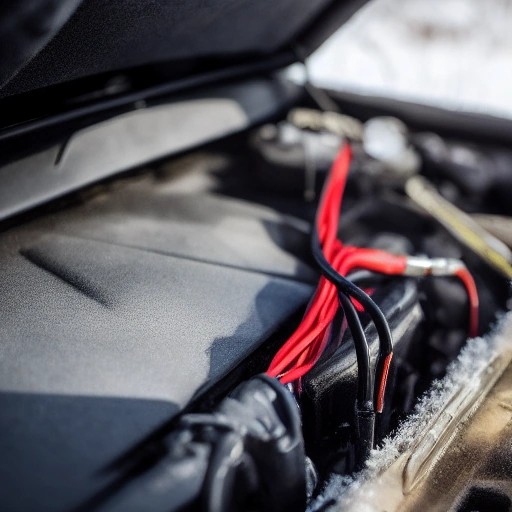
How to Improve Dodge Cold Weather Starting Reliability
That Grinding Click on a Freezing Morning — Here’s How to Improve Your Dodge’s Cold Weather Starting Reliability (Without Breaking the Bank)
Introduction
You turn the key in your Dodge Charger on a 10°F morning, and instead of that confident HEMI® V8 rumble, you hear a slow, painful crank — or worse, nothing at all — and suddenly you realize cold weather exposes every weakness in your starting system.
TL;DR
Cold weather kills batteries, thickens oil, and strains your starter. Most Dodge starting problems come from a battery over 3 years old, the wrong viscosity oil, or corroded terminals. Fix it by switching to synthetic 0W-20 or 5W-30 (depending on your engine), installing a battery blanket or maintainer, and cleaning your grounds. For SRT Performance models and AWD Dodges, the extra electronics drain the battery even faster when parked.
Key Takeaways
- Batteries lose 35% of their cranking power at 32°F and 60% at 0°F
- Your HEMI V8 needs a battery with at least 700 cold cranking amps (CCA)
- Thick winter oil is the #1 hidden cause of slow cranking
- A $50 battery tender doubles your battery life if you park outside
- Diesel Dodge Ram owners need glow plug checks — gas owners don’t
Why Your Dodge Hates February More Than You Do
You know that feeling. The temperature drops below freezing, and suddenly your beloved muscle car sounds like it’s dying of hypothermia. It’s not your imagination.
Cold slows down every chemical reaction inside your battery. At 0°F, a fully charged battery delivers only 40% of its rated power. Meanwhile, your engine oil has turned into something closer to pancake syrup. Your starter has to work three times harder to spin that HEMI V8 or Pentastar V6.
Fun fact: The 6.2L supercharged HEMI in a Challenger SRT Hellcat requires more than 250 amps just to crank — that’s double what a four-cylinder needs. If your battery is weak, it won’t even try.
And here’s the kicker — you probably drive your Dodge less in winter. Short trips don’t recharge the battery fully. So every cold morning, you’re asking a half-charged, half-frozen battery to do a summer job.
Bold reminder: Never jump start a frozen battery. It can explode. If your battery case is bulging or cracked, replace it before attempting a jump.
The Four Real Reasons Your Dodge Won’t Start in Cold (Not Just “It’s Too Cold”)
Let’s separate myths from facts. These are the actual failure points.
1. Your Battery Is Too Old or Too Weak
Most Dodge owners don’t know their battery’s age. Look for a sticker with a four-digit code — 1223 means December 2023. Any battery over three years old is a risk in cold climates.
Your Dodge needs specific cold cranking amps (CCA):
- HEMI V8 (5.7L, 6.4L, 6.2L): 700–800 CCA minimum
- Pentastar V6 (3.6L): 600–700 CCA
- Durango with stop-start: Needs an AGM battery (absorptive glass mat), not a standard flooded battery
The factory AWD Charger GT has more computers and sensors than a rear-drive model. That parasitic draw means your battery drains 15% faster overnight. Upgrade to AGM even if the manual doesn’t require it.
2. Your Oil Is Too Thick
This is huge. If you’re running 5W-20 or 10W-30 conventional oil in winter, you’re handicapping your starter. At 0°F, 10W-30 is 50% thicker than 0W-20.
The fix: Switch to full synthetic 0W-20 for HEMIs or 0W-30 for SRT models. Synthetic flows at -40°F. Conventional oil turns to grease.
True story: A 2019 Ram 1500 owner in North Dakota switched from 5W-20 conventional to 0W-20 synthetic. His crank time dropped from 4 seconds to 1.5 seconds. Same battery, same starter.
3. Your Battery Terminals Are Corroded or Loose
Pop your hood. Look at the battery terminals. See that white, crusty, blue-green powder? That’s corrosion. It acts like an electrical resistor, blocking power even if your battery is fully charged.
Clean it with a $3 terminal brush and a mix of baking soda and water. Then tighten the clamps so they don’t spin by hand. Then apply dielectric grease or battery terminal spray.
4. Your Engine Coolant Temperature Sensor Is Lying
This one surprises people. The sensor tells your Dodge’s computer how cold the engine is. If it’s reading wrong, the computer won’t add enough fuel for a cold start.
If your Dodge cranks fine but won’t fire, and it’s below freezing, suspect the coolant temp sensor. It’s a $25 part and takes ten minutes to change on most models.
Step-by-Step: How to Diagnose a Cold No-Start at Home
No tools required except your ears and eyes.
Step 1 – Listen to the Crank Speed
Turn the key or push the start button. Pay attention:
- Fast, normal crank but no fire → Fuel or spark issue (not battery)
- Slow, laboring crank → Battery or connection problem
- Single loud click → Bad starter solenoid or dead battery
- Rapid clicking (machine-gun sound) → Very dead battery
Step 2 – Check Your Voltage Without a Meter
Turn your headlights on. Then try to start. If the lights go very dim or turn off completely, your battery is dead or has a dead cell. If they stay bright but the starter doesn’t move, it’s a starter or connection issue.
Step 3 – The Ice Scraper Test (For HEMI Owners)
On HEMI V8 engines, the fuel injectors can leak overnight in extreme cold, flooding the cylinders with raw gas. Take an ice scraper or wooden spoon handle and tap each fuel injector (the plastic blocks on top of the engine) before starting. Sometimes that loosens a stuck pintle.
Does this sound like voodoo? It’s in some Dodge dealer technical service bulletins for 2011–2018 models. Try it.
Step 4 – Check Your Block Heater Cord (If You Have One)
Many Dodges sold in cold states have a factory block heater. The cord is usually zip-tied near the tow hook or grille. Plug it in for three hours before you need to start. It warms the oil and coolant, making starts effortless.
If you don’t have one, aftermarket magnetic oil pan heaters stick to your oil pan for $40. Plug them in overnight.
Winter Starting Upgrades Worth the Money (Ranked by Impact)
| Upgrade | Cost | Install Time | Effectiveness | Best For |
|---|---|---|---|---|
| Battery tender (maintainer) | $30–60 | 5 minutes | Very high | Anyone who parks outside or drives short trips |
| AGM battery upgrade | $180–250 | 20 minutes | Very high | SRT, AWD, or stop‑start models |
| 0W-20 full synthetic oil change | $50–80 (DIY) | 30 minutes | High | Every Dodge in any cold climate |
| Battery blanket/warmer | $25–40 | 15 minutes | Medium | Extreme cold (below -10°F) |
| Remote start (factory or aftermarket) | $250–500 | 1–2 hours | Medium | Lets car warm up before you drive |
| Magnetic oil pan heater | $40–60 | 1 minute | Medium | No block heater, parked outside |
| High-output starter | $150–250 | 2–3 hours | High | Older Dodges with original starter |
Bold reminder: A battery tender is not a trickle charger. Trickle chargers overcharge and kill batteries. Battery tenders (like Battery Tender Jr. or NOCO Genius) shut off when full. Leave one connected all winter if your Dodge sits for days.
Model-Specific Cold Start Quirks Every Owner Should Know
Not all Dodges act the same when the temperature drops.
Dodge Charger/Challenger (2015–Present)
- The factory AGM battery (if equipped) lasts 4–5 years. Standard flooded battery? 3 years max.
- The Uconnect system stays “awake” for up to 10 minutes after you park, drawing power. Lock your doors immediately after parking to force it into sleep mode faster.
Dodge Durango (especially AWD)
- The AWD system’s transfer case motor draws power during startup. If your battery is weak, the system throws an “AWD Unavailable” warning even before the engine fires. That’s a dead giveaway your battery needs replacement.
- Rear hatch actuators can freeze and drain the battery trying to open. If your hatch won’t open in cold, don’t keep pressing the button — you’re killing your battery.
Dodge Ram 1500 (Classic and New)
- The 5.7L HEMI has a known issue with the fuel pump relay getting too cold. If your Ram cranks but won’t start below 20°F, swap relay #57 (fuel pump) with an identical relay from another slot (like the horn). If it starts, buy a new relay.
- EcoDiesel models: Glow plugs are critical. If the “Wait to Start” light stays on longer than 10 seconds, you have a weak glow plug or module.
Dodge Hornet (New Model)
- The plug-in hybrid has a high-voltage battery that heats itself. But the 12V battery (which starts the gas engine) is tiny and buried under the rear seat. It fails without warning. Keep a portable jump pack in the cargo area.
The Hornet’s 12V battery can die in a week of cold weather if you only drive in EV mode. The gas engine never runs to recharge it. Force the engine on every few days by using Sport mode or turning on the defroster.
Portable Jump Packs — The Modern Solution You Should Own
Forget jumper cables and begging strangers for a jump. A lithium jump pack fits in your glove box and starts your Dodge 20 times on a single charge.
What to look for:
- At least 1000 peak amps for HEMI V8 models
- 1500+ amps for SRT or supercharged engines
- Built-in jump protection (won’t fry your electronics)
- USB-C charging (so you can charge it in your house)
Recommended brands that real Dodge owners use:
- NOCO Boost Plus GB40 (1000 amps) — good for V6 and small V8
- NOCO Boost X GBX155 (4250 amps) — overkill but will start a dump truck
- Gooloo GT3000 (3000 amps) — cheaper but reliable
Keep it charged every three months. A dead jump pack is just a paperweight.
What to Do RIGHT NOW (Before the Next Cold Snap)
You have two weeks before the really cold weather hits. Here’s your weekend checklist.
Saturday morning (30 minutes):
- Find your battery date code. If it’s older than 3 years, plan to replace it.
- Clean your battery terminals with a wire brush.
- Check your oil. If it’s conventional or 10W-anything, schedule an oil change to 0W-20 synthetic.
Saturday afternoon (20 minutes):
- Order a battery tender if you park outside or drive less than 20 minutes per trip.
- Buy a portable jump pack. Keep it in your back seat, not the trunk (trunks freeze shut).
Sunday (10 minutes):
- Test your remote start (if equipped). If it doesn’t work below freezing, your hood latch sensor might be frozen — spray it with WD-40.
- Locate your block heater cord (if you have one). Untangle it and hang it near your grille.
Bold reminder: Never use ether (starting fluid) in a HEMI V8 or any Dodge with electronic fuel injection. You’ll blow a hole in a piston or destroy the intake manifold backfire baffles.
The One-Week Winter Start Test
Try this tomorrow morning. Go out to your cold Dodge. Turn the key to “ON” (don’t start). Wait 5 seconds. Turn it off. Turn it back to “ON” for 5 seconds. Then start.
Why? The fuel pump primes twice, building full pressure. On Dodges with leaking injectors or check valves, this cuts crank time in half.
If that helps, you have a slow leak in your fuel system — common on 100,000+ mile HEMIs.
FAQ — Cold Weather Dodge Starting
1. Can I use a higher CCA battery than my Dodge recommends?
Yes, absolutely. Higher CCA won’t hurt anything. More cranking power is always better in cold.
2. How long should I let my Dodge warm up in winter?
30 seconds of idling, then drive gently. Modern HEMI engines warm up faster under light load. Idling for 10 minutes wastes gas and causes oil dilution.
3. Does remote start hurt my engine?
No. Factory remote start systems won’t engage if fuel is low, coolant temp is too cold, or the check engine light is on. They’re safe.
**4. Why does my *AWD* Charger crank slower than my friend’s rear-drive Charger?**
The AWD transfer case and front axle add drag. The starter spins extra mass. That’s normal, but it means you need a stronger battery.
5. My Dodge starts fine at home but won’t start at work. Why?
Short trip didn’t recharge the battery, and parking outside at work let it get colder than your garage. Drive longer or use a battery tender.
**6. Can cold weather kill my *Uconnect* screen?**
No, but a dying battery causes voltage spikes that can. If your screen flickers during cranking, replace your battery immediately.
7. Is it true that turning off the heater and radio before starting helps?
Yes. Any electrical load during cranking steals power from the starter. Turn everything off before you shut down the night before.
Start Every Cold Morning With Confidence
You bought your Dodge for the thrill — the way that HEMI roars to life, the way Launch Control pins you to the seat. None of that matters if you’re standing in a frozen parking lot with a dead battery and a sinking feeling.
But here’s the truth: cold weather starting problems are almost always preventable. A three-year-old battery is living on borrowed time. Conventional oil is your enemy. Dirty terminals are silently robbing your power.
Spend one Saturday on this checklist. Buy a battery tender. Switch to synthetic 0W-20. Clean those terminals. Throw a jump pack in your back seat.
I watched a 2017 Charger SRT with 120,000 miles start instantly at -15°F in Minnesota. The owner? A high school auto shop teacher who changes his battery every four years regardless of symptoms and runs 0W-40 synthetic year‑round. His Dodge never sits in a garage.
Your Dodge wants to start. Don’t let neglect freeze it into silence.
What’s the coldest temperature your Dodge has ever started in — and what’s your secret? Drop your story in the comments to help other owners brave the winter.
References: