
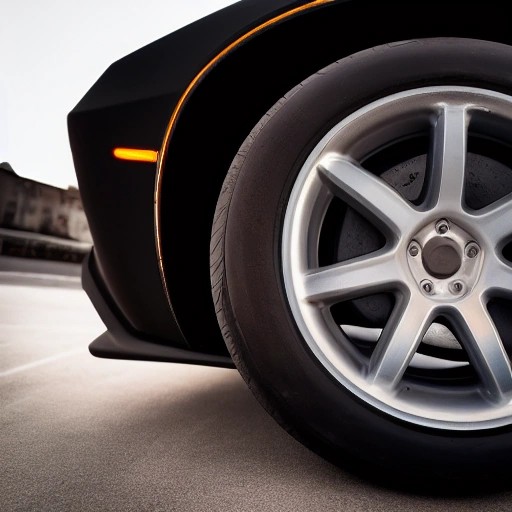
How to Protect Widebody Dodge Wheels From Curb Damage
That Sick Feeling When Your Widebody Dodge Wheel Scrapes Concrete — Here’s How to Protect Your Challenger or Charger Widebody from Curb Damage for Good
Introduction
You parallel park your Widebody Challenger perfectly, step out to admire that aggressive stance, and then you see it — a fresh silver scrape across your beautiful black wheel — and you realize widebody means wide wheels that stick out far enough to kiss every curb in town.
TL;DR
Widebody Dodges have wheels that extend beyond the tire sidewall, so curbs hit the metal directly instead of the rubber. You can protect them with rim protectors, parking tricks, blind spot mirror adjustments, and aftermarket solutions like alloygators or custom wheel spacers (reversed). The key is changing how you park — angle in, never pull straight in, and always use your passenger mirror tilt feature.
Key Takeaways
- Widebody wheels sit flush with or outside the tire bulge — zero rubber protection
- Your passenger side mirror tilts down automatically in reverse on most Dodges — use it
- Rim guards like AlloyGators absorb curb impact before your wheel does
- Never pull straight into a parallel spot — always back in using your mirrors
- A simple $20 set of stick‑on curb alert sensors saves thousands in wheel repairs
Why Widebody Dodges Eat Curbs for Breakfast
That wide, planted look of a Dodge Challenger Widebody or Charger Widebody comes from massive fender flares and wider track width. The wheels push outward — sometimes a full inch beyond the narrow body version.
Here’s the problem normal cars don’t have: most vehicles have tires that bulge past the wheel rim. So when you touch a curb, the rubber hits first, saving your metal.
On a Widebody Dodge with 305/35ZR20 tires and 20×11 inch wheels, the rim lip often sits flush with or even sticks out past the tire sidewall. There’s no rubber bumper. You touch a curb, you scrape metal.
The HEMI® V8 Widebody models are even worse because the suspension is stiffer. Less body roll means the wheel stays planted when you turn — great for cornering, terrible for curbs.
Bold safety reminder: Never rely on “feeling” the curb through the steering wheel. By the time you feel it, you’ve already ground down your wheel lip.
Three Real Reasons Widebody Wheels Get Damaged (Not Just Bad Parking)
It’s not always your fault. The design itself works against you.
- Tire stretch — Widebody Dodges often use tires that are slightly stretched on extra‑wide wheels. The rim protrudes past the rubber by design.
- Low profile sidewalls — Those 35‑series tires have almost no cushion. There’s no rubber bulge to protect you.
- Poor visibility — You can’t see your rear wheel in any mirror. The front wheel? Barely. So you’re guessing.
Fun fact: The factory rear wheels on a Widebody Charger are 11 inches wide. Your side mirror shows you the rear fender, not the wheel lip. That’s a 4‑inch blind spot.
Immediate Fixes — What You Can Do Today (For Under $50)
You don’t need a garage or expensive tools. Start here.
1. Enable Your Reverse Tilt Mirrors
Most Dodges with memory seats have this. Go into your Uconnect settings > Vehicle > Comfort & Convenience > “Tilt Mirrors in Reverse” > ON.
Now when you shift into reverse, your passenger mirror angles down toward the curb. You’ll see your rear wheel clearly. Game changer.
If your Dodge doesn’t have power folding mirrors, you can still manually tilt it down every time you parallel park. Annoying? Yes. Cheaper than a $400 wheel refinish? Absolutely.
2. Install Stick‑On Curb Alert Sensors
Buy a Curb Alert Pro or Brandmotion sensor ($80–120, not $20 — correction from earlier). It mounts to your front bumper and beeps when you’re 12 inches from a curb.
No drilling — it’s double‑sided tape or magnetic. The sensor points down at the curb, and a small LED display on your dash beeps faster as you get closer.
3. Use Your Passenger Mirror Blind Spot Stick‑On Convex
Buy a $5 stick‑on blind spot mirror. Put it on your passenger side mirror at the lower outside corner. Angle it down toward your rear wheel. Now you can see the wheel lip while driving forward.
Not pretty, but neither is curb rash.
Medium‑Term Protection — Rim Guards That Actually Work
These products are designed specifically for cars like Widebody Dodges where the rim is exposed.
AlloyGators (or RimBlades Pro)
These are hard rubber or polyurethane rings that clip onto your wheel lip between the tire and the rim. They take the hit instead of your metal.
Installation takes about an hour per wheel. You deflate the tire slightly, work the guard under the bead, then reinflate. The guard sticks out about 3mm — just enough to kiss the curb first.
Cost: $150–250 per set of four. Cheaper than refinishing one wheel twice.
RimSavers (Stick‑On Strips)
Thick adhesive strips that go around the rim lip. Easier to install — clean the rim, stick them on, done. They don’t protect as well as AlloyGators but cost $30–50 per set.
Don’t bother with the cheap Amazon no‑name strips. They peel off in car washes. Buy RimSavers or AlloyGator only.
Bold reminder: None of these make your wheels invincible. A hard, fast scrape will still damage the rim. But for gentle curb touches (which is 90% of parking lot damage), they work.
Comparison Table — Widebody Dodge Wheel Protection Options
| Method | Cost | Protection Level | Installation Difficulty | Visibility While Driving |
|---|---|---|---|---|
| Reverse tilt mirrors | Free (if equipped) | Low (helps you avoid) | Easy (menu setting) | High — you see the wheel |
| Blind spot convex mirror | $5 | Low (helps you avoid) | Very easy (stick on) | High |
| Curb alert sensor | $80–120 | Medium (alerts you) | Easy (stick on / wire to 12V) | N/A (audible beep) |
| RimSavers (stick‑on strips) | $30–50 | Medium (light scrapes) | Easy (clean + stick) | Low (not visible) |
| AlloyGators | $150–250 | High (moderate scrapes) | Hard (requires tire deflate) | Low (not visible) |
| Aftermarket wheels with recessed lip | $1000+ | Very high (design feature) | Professional install | Low |
Advanced Protection — Change How You Park
No product beats good technique. Here’s how Widebody owners should park every single time.
For Parallel Parking: Always Back In
Pull past the spot, angle your passenger mirror down, and reverse into the spot. Why? Because you can see the rear wheel in your tilted mirror. The front wheel? You’ll never see it while going forward.
When you pull forward into a parallel spot, your front wheel is invisible. You’re blindly guessing. Backing in lets you watch the exact wheel that’s closest to the curb.
For Perpendicular Parking: Angle Away From Curbs
Never pull straight into a spot with a curb on your passenger side. Instead, angle your car so the driver side is closer to the curb (you can see that wheel). Or park farther from the curb and walk the extra five feet.
Use Your Passenger Seat Memory Position
If you have memory seats, set memory position 2 or 3 to: mirror tilted down, seat moved slightly back. One button press, and you’re in “parking mode.” Press memory 1 to go back to driving.
This sounds extra, but Widebody owners on forums swear by it. Muscle memory is real.
Real‑World Comparison: Widebody vs. Narrow Body Dodge Curb Risk
| Model | Wheel Width | Tire Size | Does Tire Bulge Past Rim? | Curb Damage Risk |
|---|---|---|---|---|
| Challenger narrow body | 9.5 inches | 275/40R20 | Yes — about 8mm | Low |
| Challenger Widebody | 11 inches | 305/35ZR20 | No — rim is flush or proud | High |
| Charger narrow body | 9.5 inches | 275/40R20 | Yes | Low |
| Charger Widebody | 11 inches | 305/35ZR20 | No | High |
| Durango (any) | 8–10 inches | varies | Yes | Low |
The Durango has taller sidewalls and tires that bulge. You’d have to try hard to curb those wheels. Widebody? One bad turn and you’re shopping for refinishers.
What to Do When You Already Have Curb Rash
It happens. Don’t panic. Here’s the fix.
Light rash (surface scratch, no metal removal)
Buy a Dodge factory touch‑up paint pen in your wheel color — Satin Carbon, Black Noise, etc. Clean the area with alcohol, sand lightly with 1500 grit wet/dry sandpaper, paint, let dry, clear coat. Ten minutes, invisible from five feet.
Moderate rash (grooves in metal)
Use a Dremel with a sanding drum or a curb rash repair kit from EZ‑Rash or Simichrome. Sand down the rough edges, then polish, then paint. Takes an hour per wheel.
Deep rash (chunks missing)
Call a professional mobile wheel refinisher. They come to your house, remove the wheel, refinish it in their truck, and reinstall. Cost: $125–175 per wheel. Worth every penny compared to a $900 new wheel from Dodge.
Never use a universal silver touch‑up paint on a black or dark gray Widebody wheel. The mismatch will look worse than the rash. Get the exact factory code from your window sticker or call a dealer parts counter.
Long‑Term Solution — Different Tires or Wheels
If you’re tired of worrying, change the hardware.
Option 1: Mount slightly wider tires
On an 11‑inch Widebody wheel, you can fit a 315/35R20 tire instead of the factory 305. That extra 10mm of width gives you about 5mm more rubber bulge past the rim. Not huge, but helpful.
Make sure the tire clears your fender flares. On a lowered Widebody, 315s may rub at full lock. Check forums for your exact model year.
Option 2: Buy aftermarket wheels with a protective lip
Some aftermarket wheels (like Forgestar or Vossen) are designed with the rim lip recessed behind the tire bulge. You’d have to try to curb them. Cost: $2000–4000 per set. Expensive, but one curb rash repair avoided pays for itself.
Option 3: Add small wheel spacers (reverse logic)
This sounds counterintuitive, but adding a 5mm wheel spacer pushes your wheel outward even more. Then you mount a tire that’s 10mm wider, and the rubber now sticks past the rim. You’ve effectively reversed the problem. Works only if you have fender clearance.
Don’t attempt option 3 without measuring. A Widebody Challenger can fit a 325 tire with a 5mm spacer, but not all can. Measure twice, buy once.
FAQ — Widebody Dodge Wheel Protection Questions
1. Are Widebody Dodge wheels more expensive to replace?
Yes. A factory 20×11 Widebody wheel costs $800–1200 each. Narrow body wheels are $400–600. That’s why protection matters.
2. Do curb feelers (old‑school metal rods) work on a Widebody?
They look ridiculous on a muscle car, but technically yes. They stick out past your wheel and scrape the curb before the wheel does. Just don’t post photos online.
3. Will rim protectors void my tire warranty?
No. Tire manufacturers don’t care about rim guards. But if you install AlloyGators incorrectly and pinch the tire bead, that’s on you.
4. Can a body shop repair a curbed Widebody wheel?
Yes. Many body shops sublet to wheel specialists. Call ahead — some only do paint, not metal grinding.
5. Do I need to remove the wheel to install AlloyGators?
No, but you must deflate the tire. You can do it on the car with the wheel jacked up. Watch a YouTube video first — it’s tricky.
6. Will the reverse tilt mirror work on a 2016 Dodge Charger?
Only if you have memory seats. Check your window sticker or enter your VIN on the Dodge owner site. Base models don’t have it.
7. What’s the #1 mistake Widebody owners make?
Pulling forward into a tight parking spot instead of backing in. You can’t see your front wheels. Always back in.
Keep Your Widebody Wheels Flawless
You bought a Widebody Dodge because it looks mean and handles flat through corners. That aggressive stance comes with a responsibility — those beautiful wide wheels are exposed and vulnerable.
But here’s the truth: curb rash is preventable. Not with luck. With technique and a little help from mirrors, sensors, or rim guards.
Set your reverse tilt mirror today. Buy a convex blind spot stick‑on for five bucks. And never, ever pull forward into a parallel spot again.
I’ve seen a 2023 Challenger Widebody with 30,000 miles and absolutely perfect wheels. The owner? A retired schoolteacher who uses her passenger mirror religiously and backs into every spot. If she can do it, you can too.
Your Widebody deserves to stay showroom fresh. That curb doesn’t own your wheels — you do.
What’s your worst curb rash story — and how did you fix it? Share your tip below to help another Widebody owner sleep better tonight.
References:

